42%of straight Gen Z women think men don't want deep talk early
65%of straight Gen Z men say they do
About 30,000 Hinge users. First dates, not chat. hinge.co ↗
Turning Shared Priorities Into Conversation
DeepSync is a three-round, gamified experience within existing Bumble chats, designed to help two people explore what matters and turn their answers into conversation.
Recorded from an early prototype, so on-screen text still says “3-Day Sprint” and “Day 1”. The current design uses three rounds.
A few taps each, built to bring two people back to the same chat.
Share your prioritiesEach person responds independently.
Discover common groundShared insights appear once both have answered.
Bring it back to chatReview an AI-drafted question, edit it, and send when ready.
The class brief aimed to increase premium conversion through proximity alerts, notifying users when a match was within 0.5 km.
I explored a different path toward that goal: creating more value within existing matches. DeepSync uses three short, gamified rounds to help two people share their priorities and find something to talk about.
What public research and company statements suggest about chats after a match. I didn’t run interviews for this project, and none of these sources tests DeepSync.
Every new match restarts the conversation from zero.
People want deeper talk but wait for the other person to go first.
Pressure and time limits make chatting feel like a task.
“It can sometimes be burdensome to start a chat every single time.”
“Women started to feel burdened by having to think of what to say.”
“Our community is asking for more flexibility, less pressure.”
42%of straight Gen Z women think men don't want deep talk early
65%of straight Gen Z men say they do
About 30,000 Hinge users. First dates, not chat. hinge.co ↗
In 157 post-match Tinder chats, personal topics mostly opened up through questions. When one didn't land, people shared first to invite a reply.
Discourse & Communication. DOI ↗
Later in 2026, after this project, Bumble let anyone message first and extended the reply window from 24 to 72 hours. It cited a 2024 internal survey of 2,267 women users: two-thirds preferred men to message first because it felt less pressured. Fast Company ↗
Hinge's report surveyed about 30,000 users worldwide in 2025. Its question-gap and depth findings are about first dates. hinge.co ↗
Pew Research Center (2020): of U.S. adults who used a dating site or app in the past year, 45% felt more frustrated and 28% more hopeful. pewresearch.org ↗
Quotes come from company staff, a coach, and published reporting, not from users I interviewed. None of these sources tests DeepSync.
Low-stakes activities make room for conversations about what matters.
The idea was to make sharing feel approachable, then turn those responses into conversation. If that experience gives people a worthwhile reason to return to the same chat, it could support retention.
DeepSync runs as three rounds, each centered on one topic. Light game elements shape the shared part, and AI turns it into conversation.
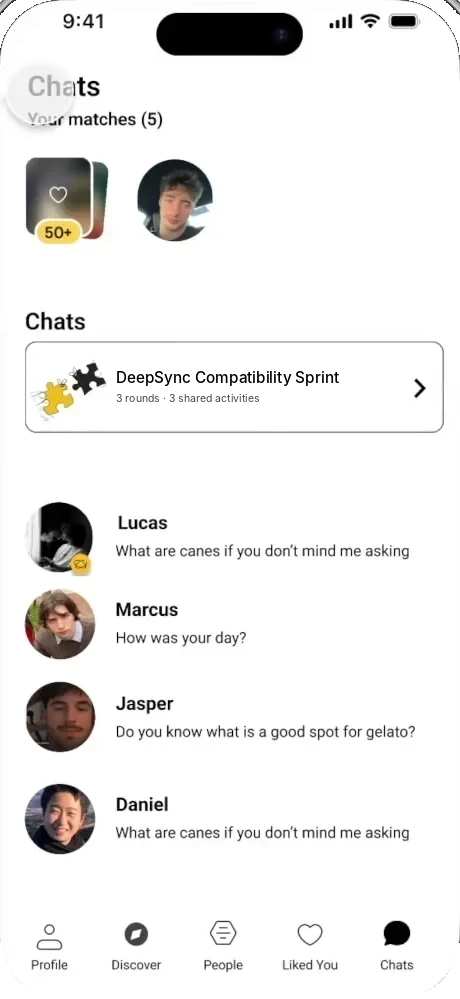
Start from chatThe invite sits inside an existing match.
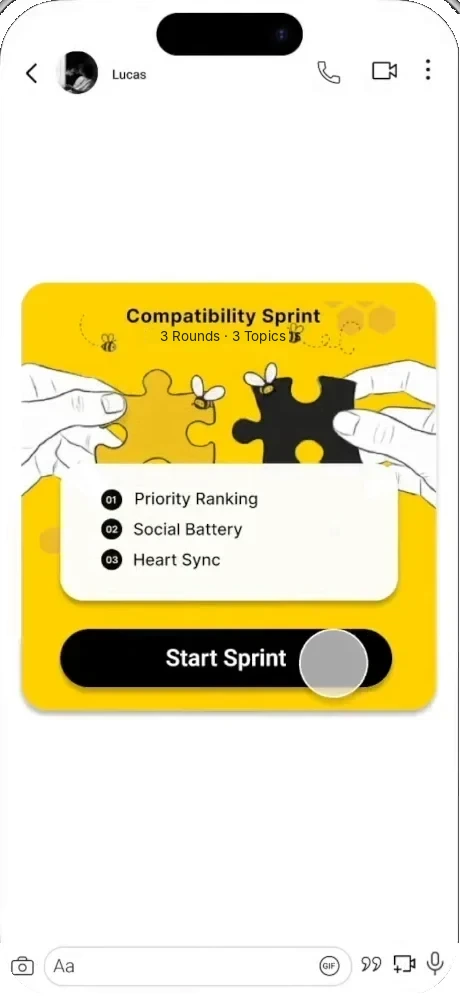
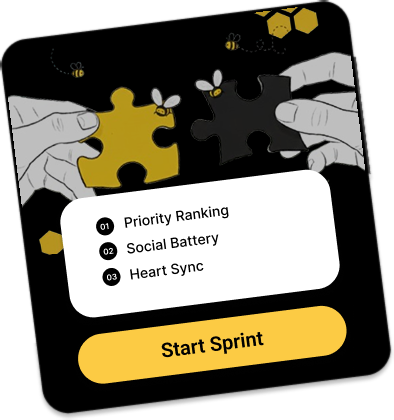
See the topicsShort, structured prompts.
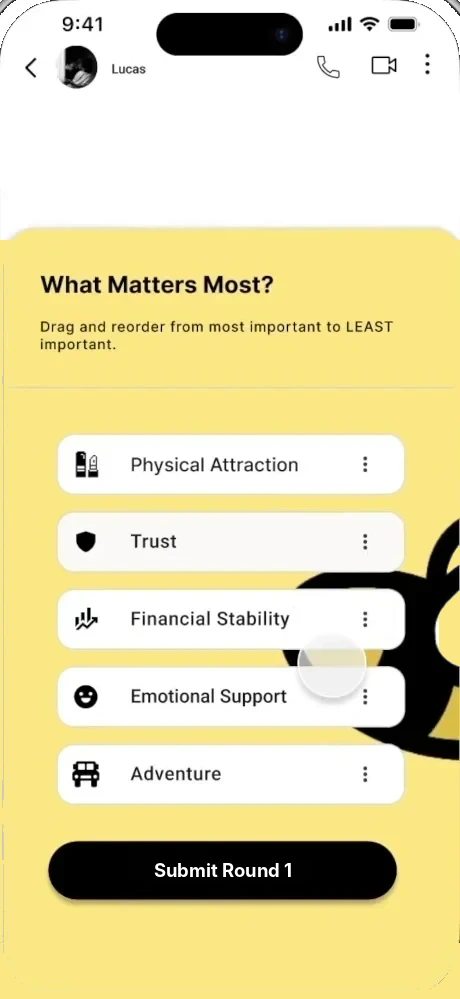
Rank what mattersDrag to order, in a few taps.
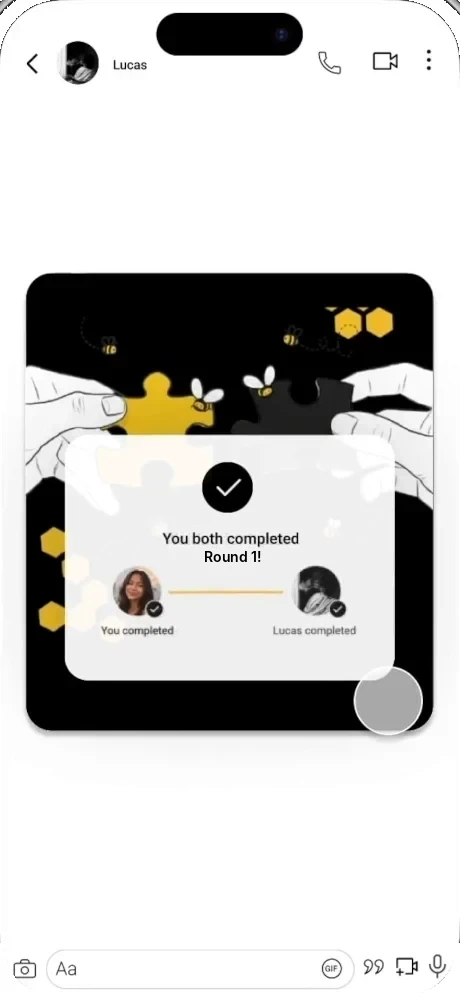
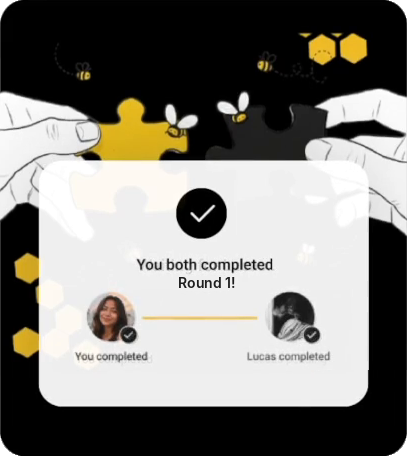
Both completeThe comparison appears once both share.
Between steps 3 and 4, the card shows you’ve finished while the other person hasn’t yet.
Keep each step smallA round is a few taps: rank a short list and submit. Taking part stays light enough to do between other things.
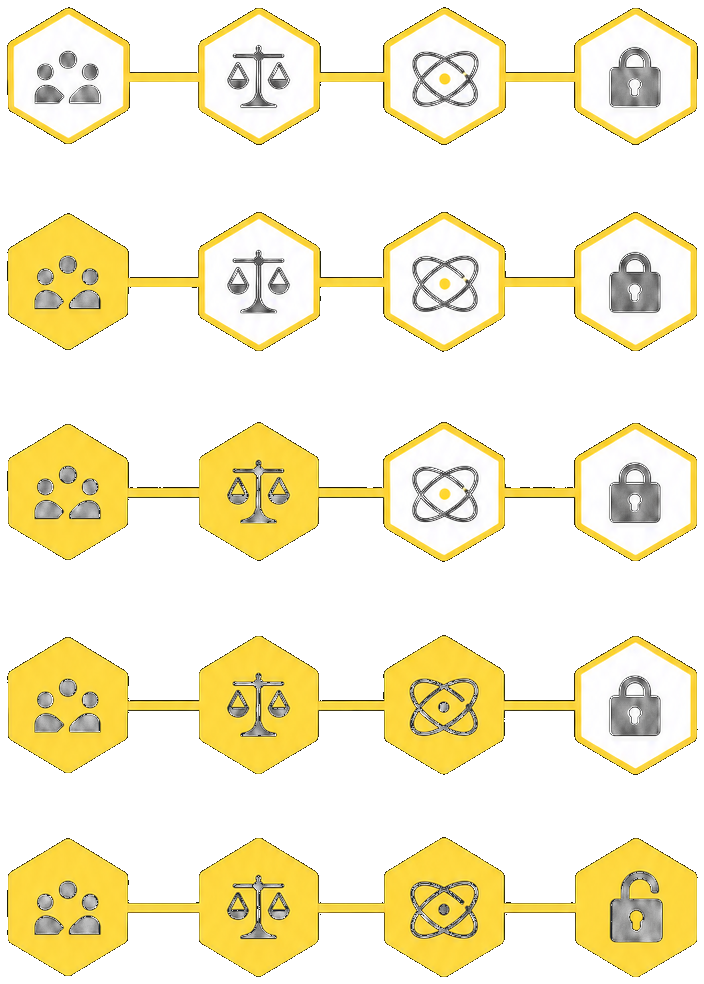
Make shared progress visibleThe progress hexagons show how far you’ve come, and the waiting card shows where the other person is.
Create the insight togetherThe comparison appears only after both people share, so what comes out of it belongs to both of them.
The question, generated from both people's answers, enters the chat box first as an editable draft.
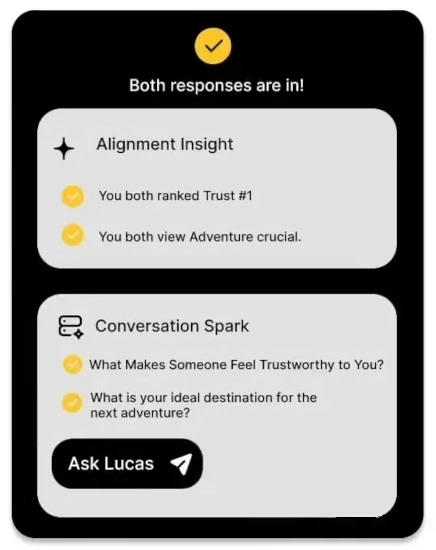
Add a spark to chatTap Ask Lucas to put the suggested question in the message box.
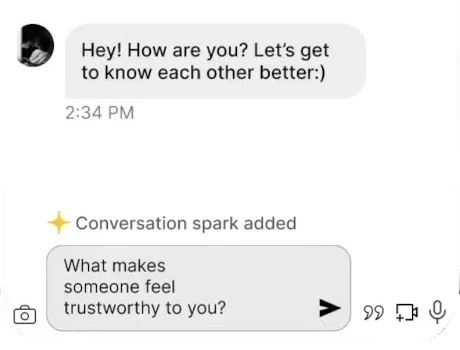
Review and editIt arrives as a draft, not a sent message.
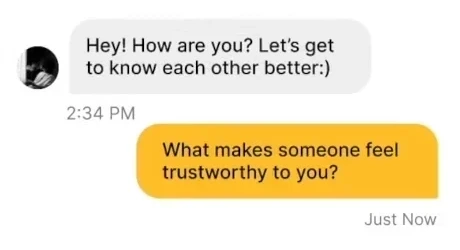
Send when readyNothing goes out until the user sends it.
A structured comparison finds what two people share or where they differ. AI turns that into a specific question they can edit and send in their own words.
The original goal was premium conversion, so I sketched a paid, deeper DeepSync Report. Willingness to pay hasn’t been tested. The match percentages, attachment labels, and conflict predictions in this mockup are placeholders, not scientific results; if I took it further, I’d drop them, since they label people instead of helping them talk.
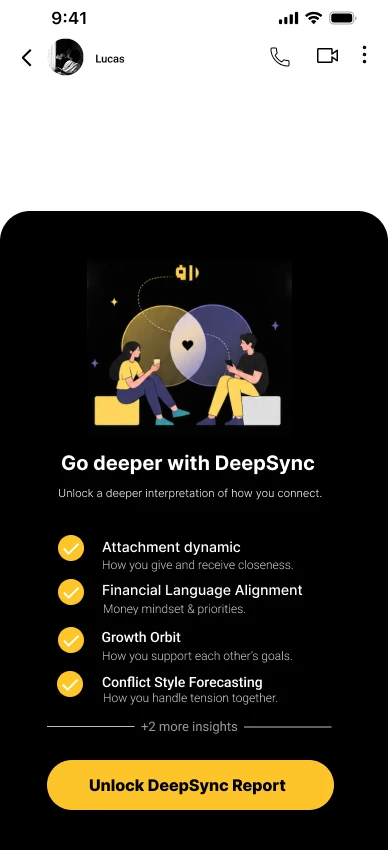
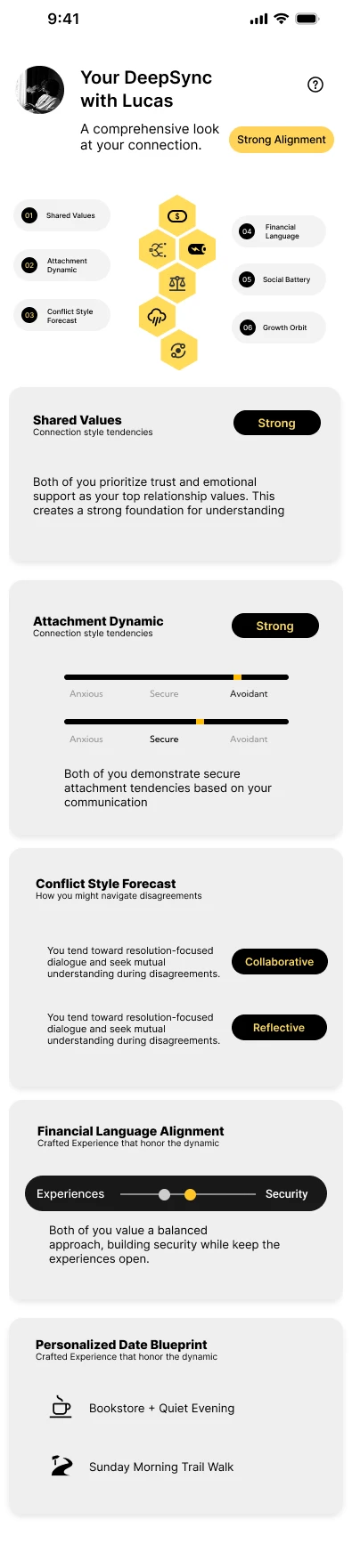
Inside the report, a radar view across six areas of the relationship. The percentages are placeholder values from the mockup.
I ran the prototype through the open-source design-critique skill ↗ with an AI assistant. Not user evidence, but it pointed to three fixes.
Round 2 ChallengeKeep your streak!
Round 2 is readyWhenever you’re free
Is it clear what’s shared?
Usability sessionsDoes the prompt lead to a reply from both people?
PilotDo people come back, unrushed?
Pilot + follow-upsThree rounds create a shared rhythm, but can also introduce pressure. The next challenge is balancing meaningful participation with freedom to engage at your own pace.
Could shared priorities help people find meaningful matches before they start chatting? An opt-in concept that highlights common values without compatibility scores.
Concept exploration · Not tested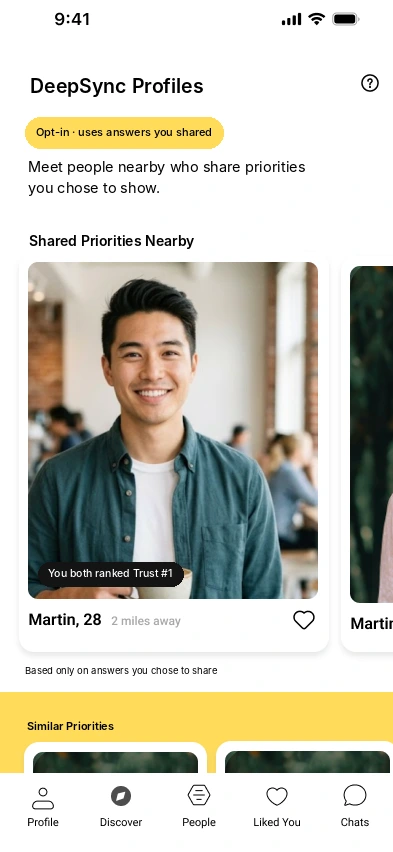
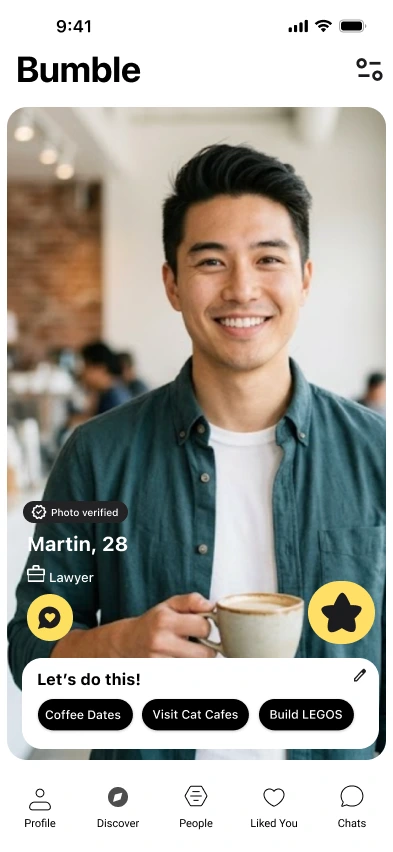
DeepSync explores how shared activities can turn early conversations into more meaningful exchanges. Instead of giving people another compatibility score, it creates moments of mutual discovery and brings those insights back into chat.
The bigger lesson for B2C design is that engagement isn’t the same as value. Completing three rounds means little if people don’t continue talking. The next step is to test whether these interactions lead to more reciprocal conversations, without adding pressure to participate.
Rebuilt in Oct 2026 from the original prototype: the colors, components, and states behind the flows above.
#FED03ESelection, progress, your #1#FDBD26Messages you send#FBE783Activity background#000000Primary actions, insight panel#E1E1E1Cards on dark#EFEFEFRows, composer#FFFFFFChat background#737373Secondary textWhat matters most?
Title · 22 / SemiboldYou both ranked Trust #1
Body · 15 / Medium3 rounds · 3 shared activities
Caption · 12 / RegularDefault, top choice, and while dragging.
One black pill per screen, labeled with what it does.
Each round fills in yellow when it’s done. The lock opens after the last one.
Appears once both people have answered.
Alignment insight
You both ranked Trust #1
You both see Adventure as crucial
The AI question lands in the composer as an editable draft.
Conversation spark added
Received, sent, and the round reminder (updated copy).
Round 2 is readyPick it up whenever you’re free.