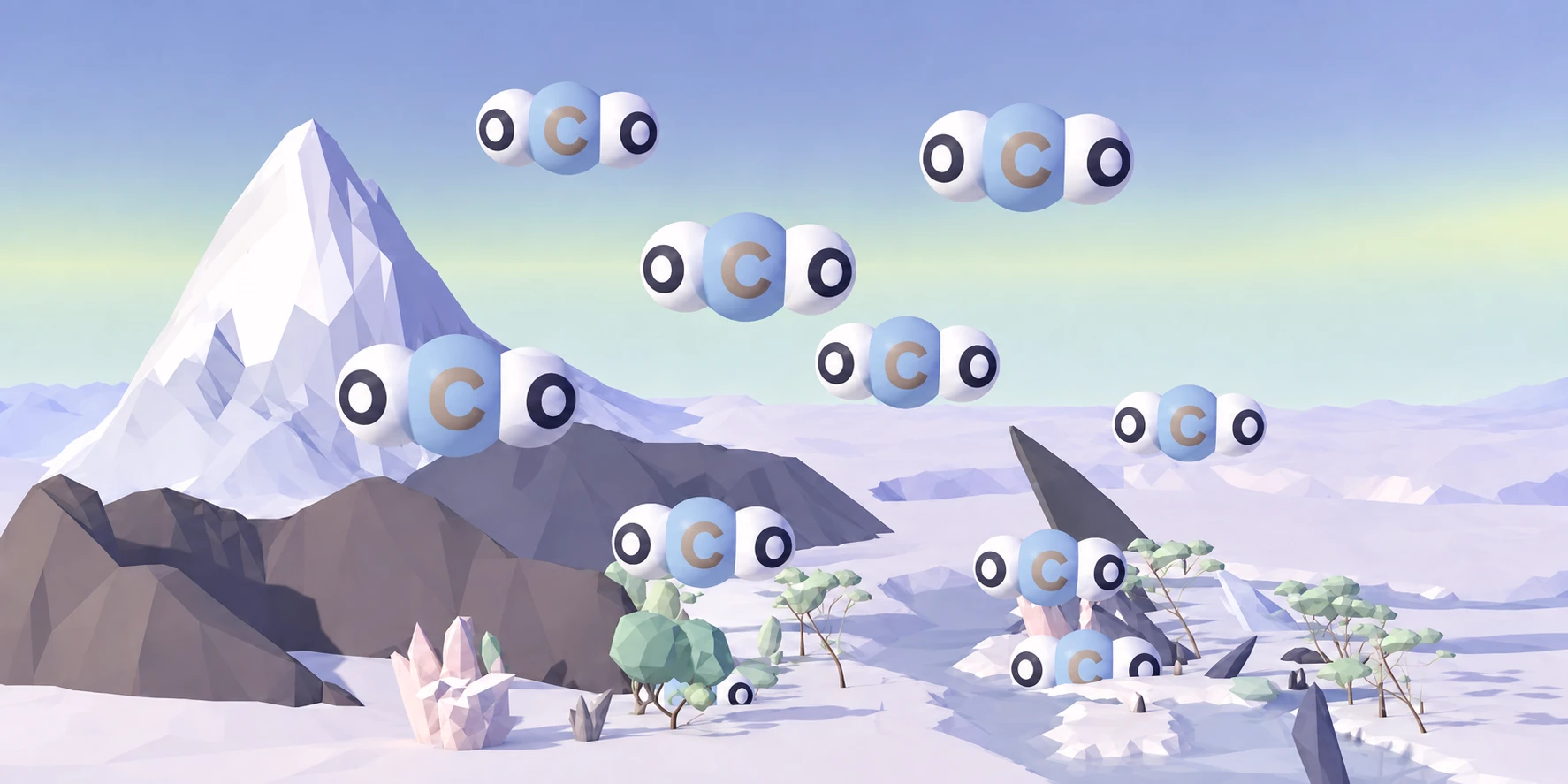
AR / VR Game · Informal STEM Education
Molecule Mythos
A tabletop AR game that teaches chemistry and environmental science through scenarios, so what students learn in one world carries to the next, and to the real one.
The problem
Chemistry learned as formulas stays on the page
Students can balance an equation for methane or recite what oxidation means, then fail to recognize the same chemistry in a news story about melting ice or a methane leak. Knowledge learned without a context rarely travels to a new one.
The approach
Put the concept inside a situation
Molecule Mythos drops players into worlds in trouble: a planet choking on methane, a cave starved of oxygen, a glacier melting under the sun. To save each one they have to choose the right chemistry and act on it with physical cards. The goal is understanding that carries beyond the game, to new problems and to the real world.
Learning design
Scenario first, formula second
The game is built on context- and scenario-based learning. Every concept arrives as the answer to a problem the player is already trying to solve, and reappears in a different world so it has to be recognized, not just recalled. That repetition across contexts is what builds far transfer.
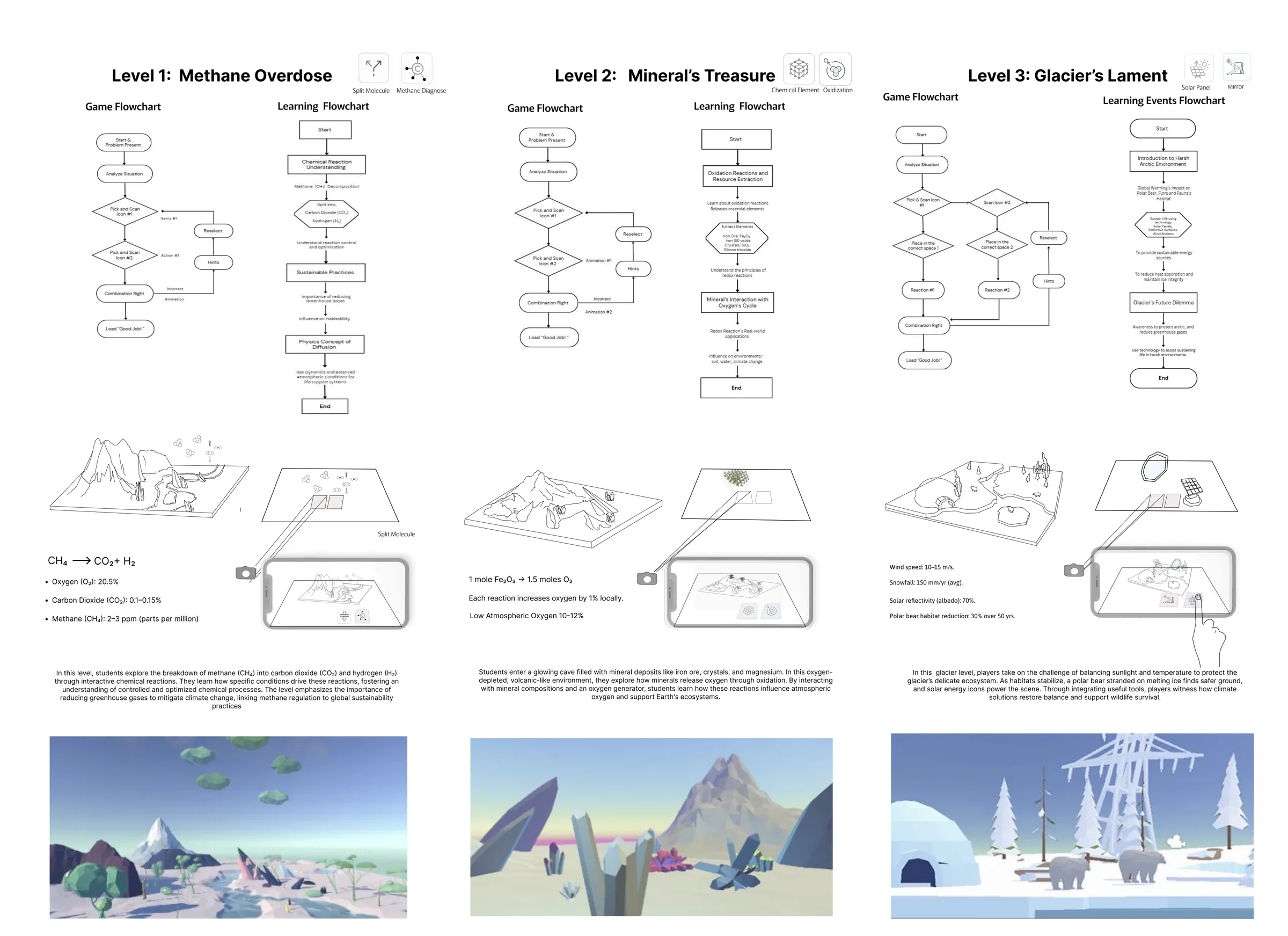
- ContextMeet a world in troubleEach level opens with a problem and real numbers: CH4 at 2–3 ppm, oxygen down to 10–12%, 30% of polar bear habitat lost in 50 years.
- DecideChoose the chemistryPlayers pick which card fits the situation. A wrong pairing sends them back with a hint, so they reason about the problem instead of guessing.
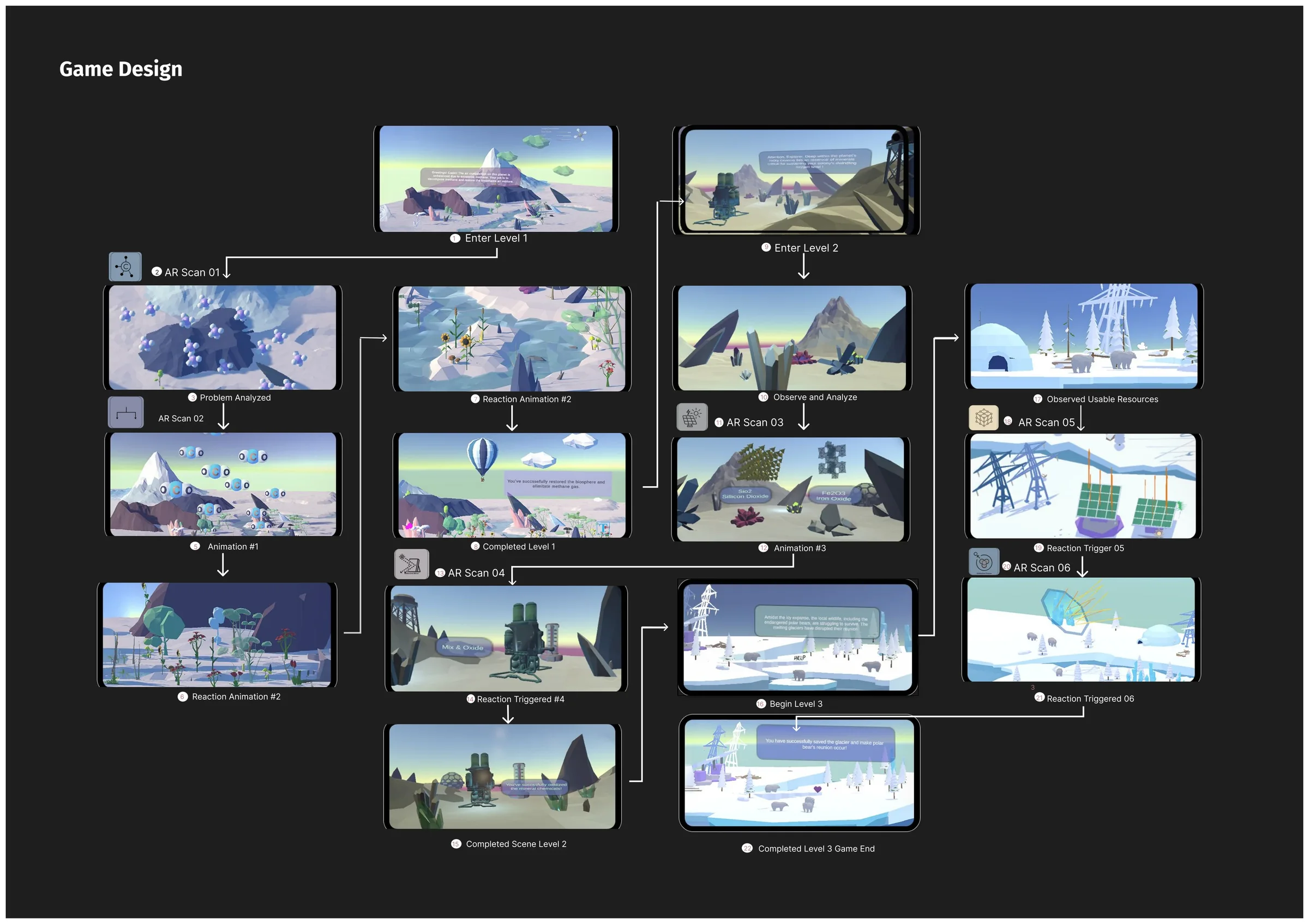
- ActRun the reactionThe right combination triggers the reaction in the scene. Cause and effect are visible: methane breaks down, oxygen rises, the ice holds.
- TransferCarry it somewhere newEach level closes by linking the reaction to a real issue: greenhouse gas policy, soil and water, arctic wildlife. The concept leaves the game with the player.
The whole loop
- Near transferSame worldApply a reaction to the next challenge in the level.
- Across contextsThree worldsRecognize the same principles (energy, redox, gas balance) in very different environments.
- Far transferThe real worldExplain real climate problems, like methane emissions or glacier melt, with the chemistry they practiced.
The deck
Six cards, one controller
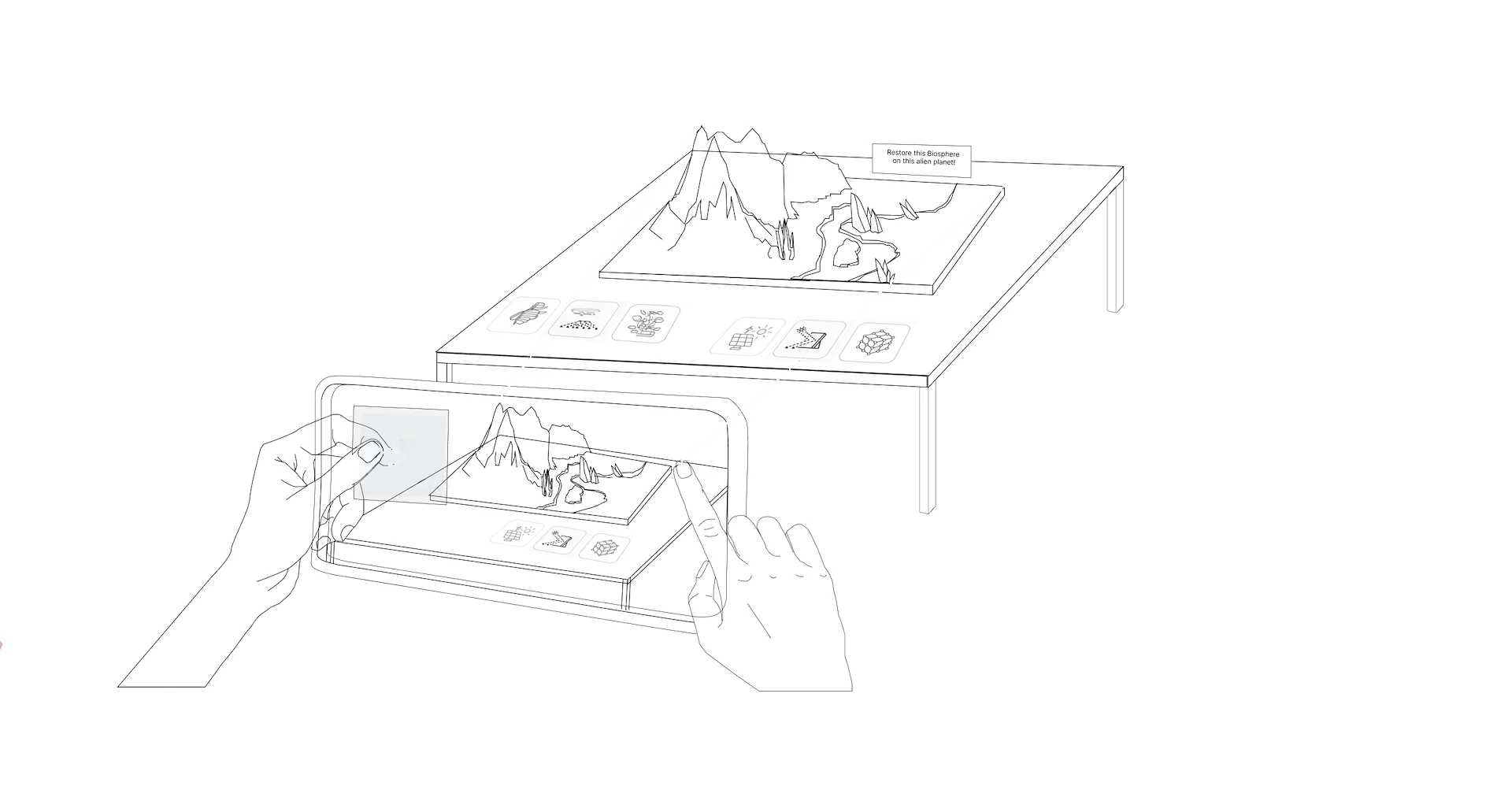
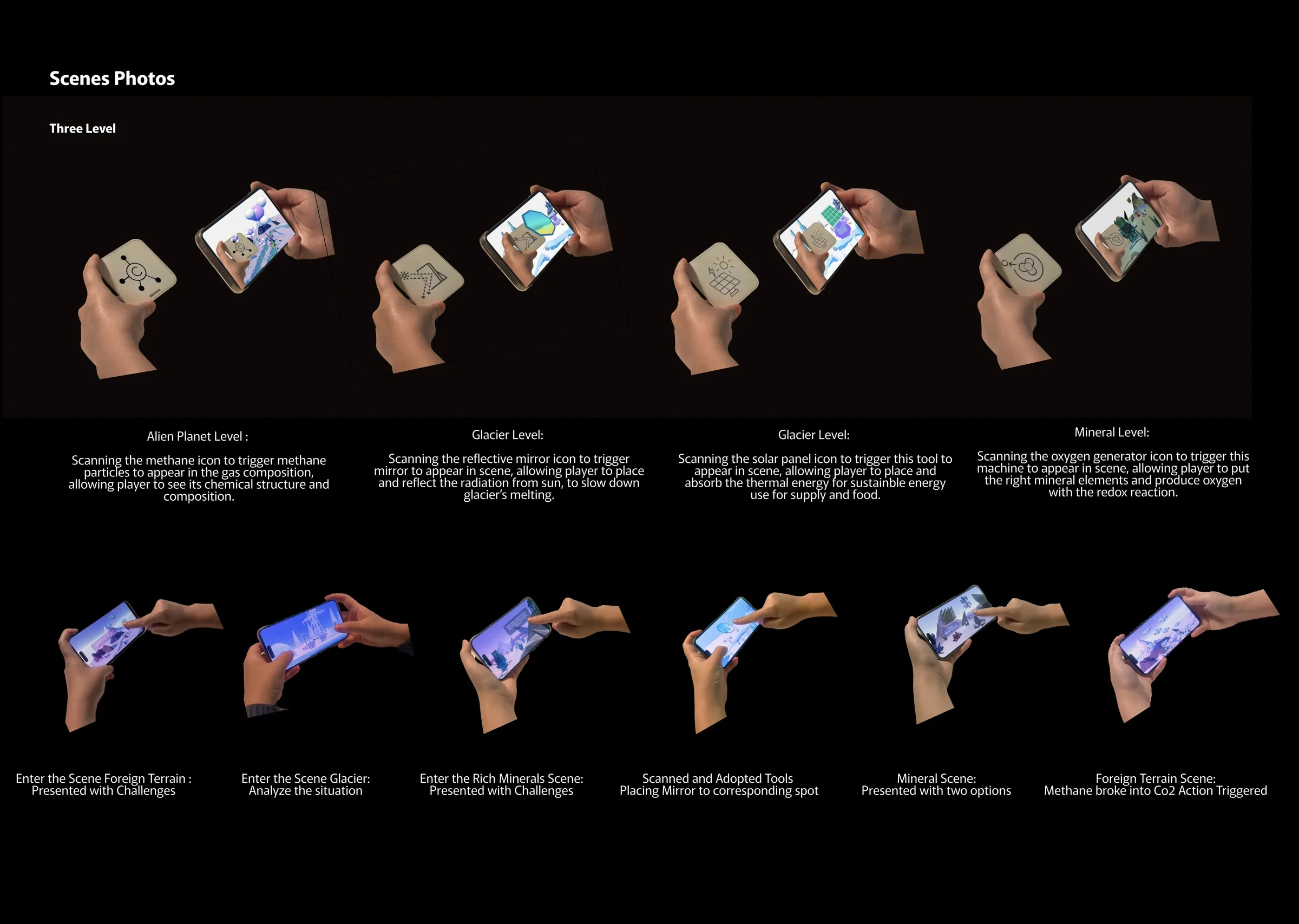
Each card is a Vuforia image target. Scanning one brings a molecule, a machine or a material into the scene. Holding the concept in your hand turns it into something you use, not just something you read.
Interaction scene
The table is the world












Level & game design
From flowchart to device
The outcome