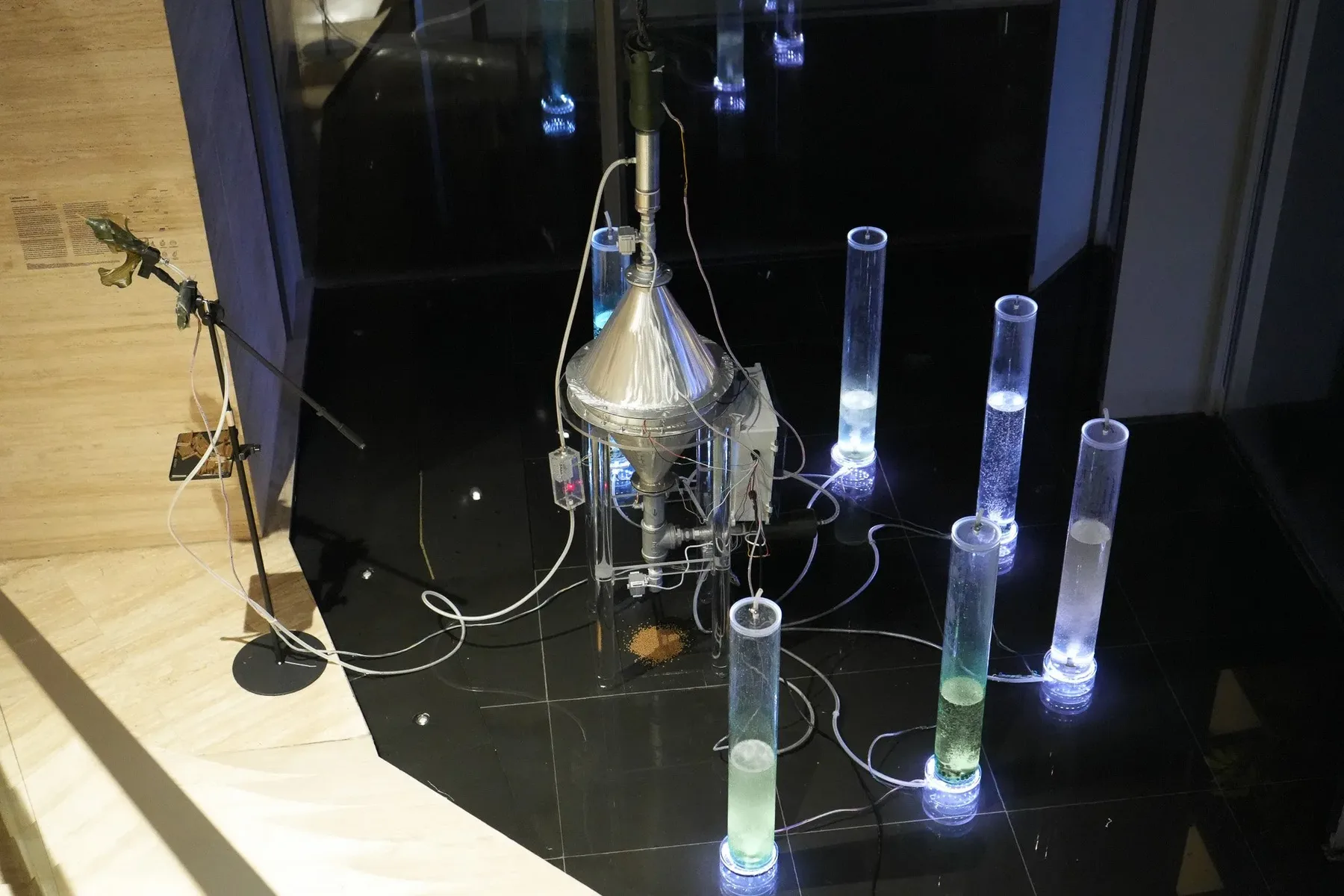
The installation at night: a steel cone reactor on acrylic legs, surrounded by lit algae columns on a black floor, with the breath microphone on the left.

Interactive installation · Real-time data visualization

Progenitorial HysteresisCarbon Farm

A visitor breathes into a bioplastic mouthpiece. The machine measures the CO₂ in that breath, feeds it to living algae, and shows on a small screen how much carbon one person just gave, and how little it is.
Type
Interactive installation
Team
UT-Austin Eco Centric Future Lab
Lead engineer
Ben Evanson
Project lead
Jiabao Li
Date
Dec 2023 – Mar 2024
Location
Duande Art Museum
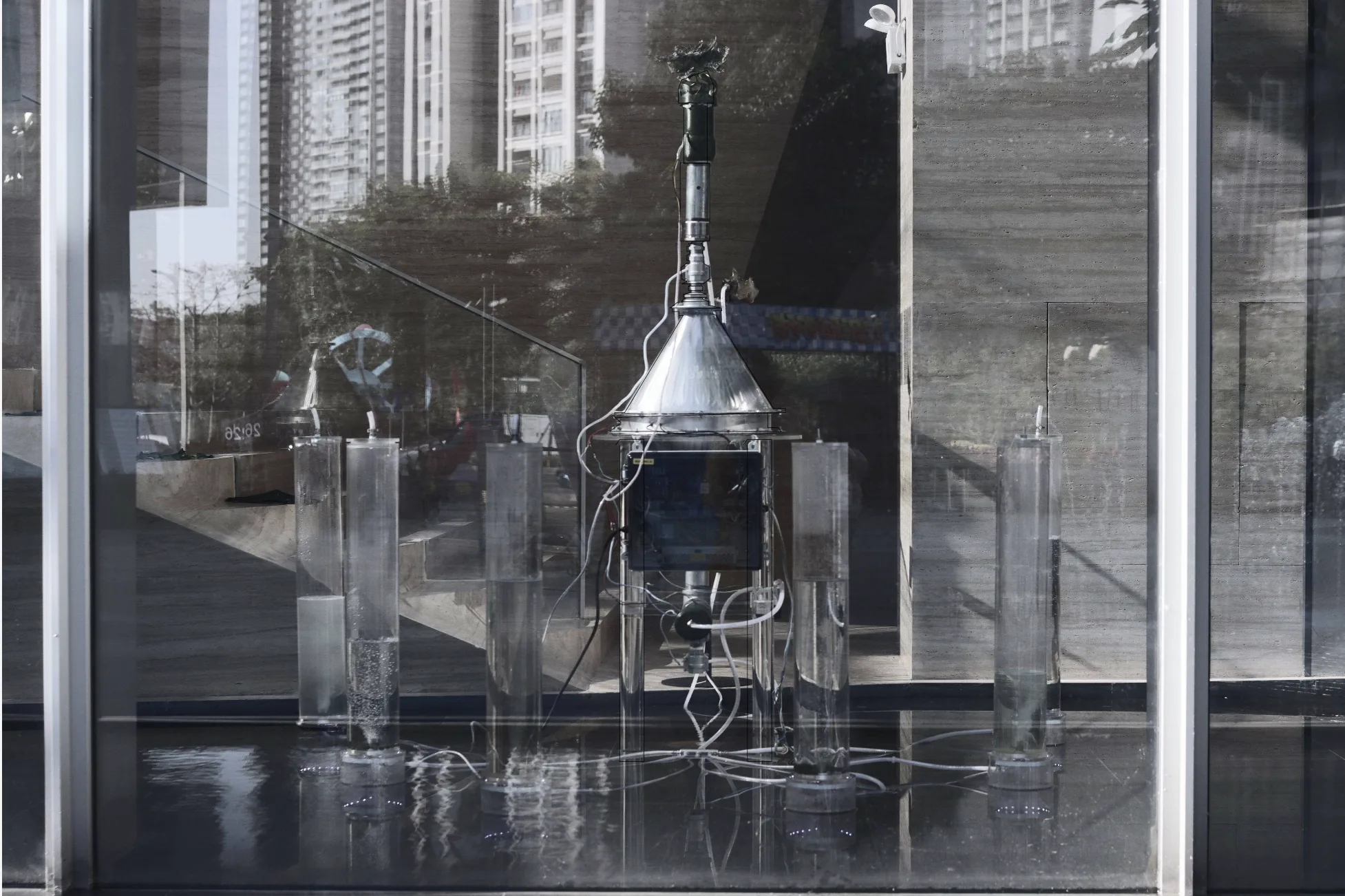
The installation seen from outside through the gallery's glass wall, with the city's apartment towers reflected over the reactor and algae columns.
From the street: the reactor behind the gallery glass, with the city reflected over it.

01 · Concept

One breath, measured

Carbon numbers are usually too large to feel. Carbon Farm shrinks them to the size of a single exhale: you breathe out, and the machine tells you exactly what that breath contained and where it went.

The CO₂ doesn’t disappear. It is absorbed, released into the water of five algae photobioreactors, and turned into biomass you can see growing in the columns around the machine.

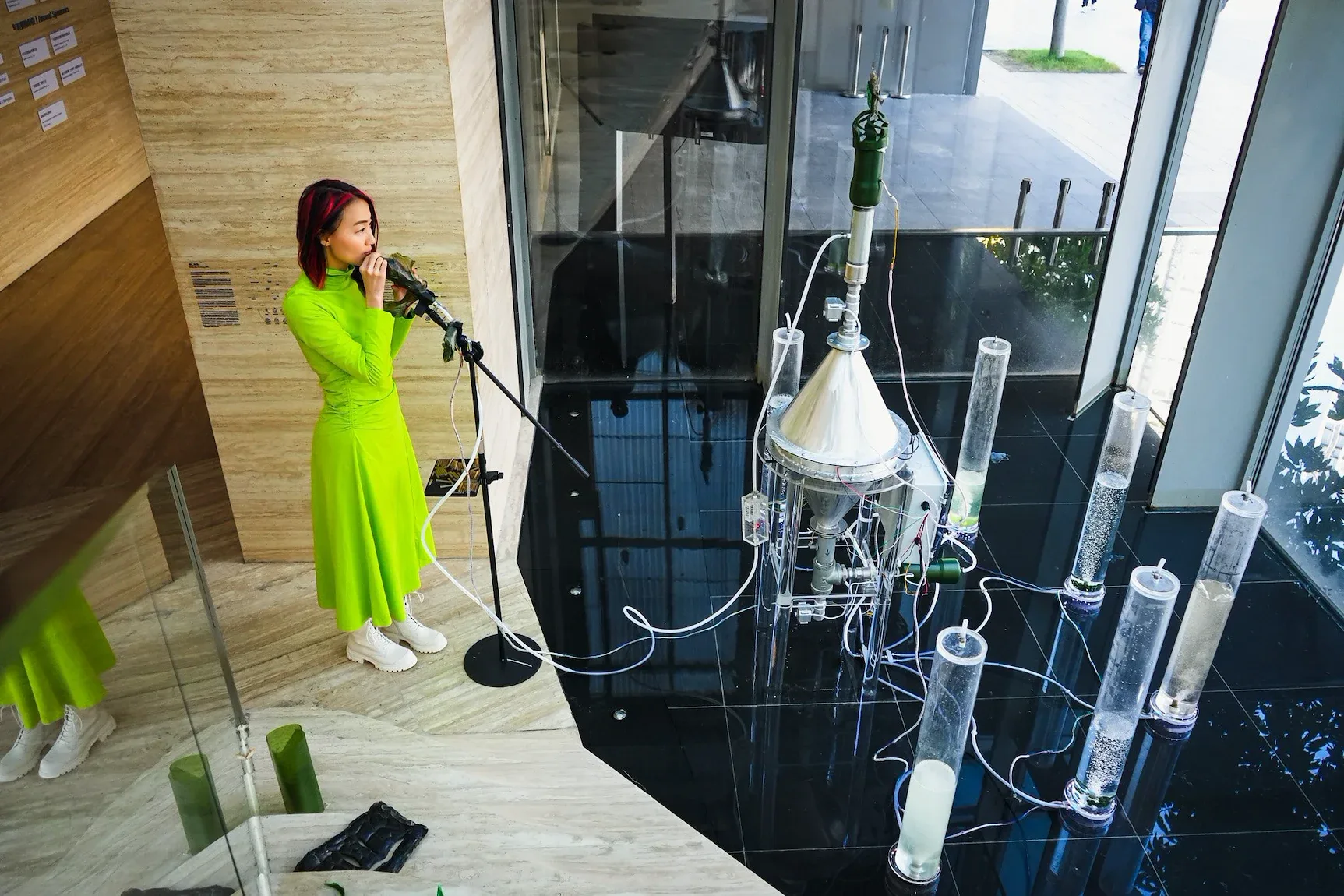
A visitor in a green dress breathes into the bioplastic mouthpiece on a microphone stand, with the reactor and algae columns on the black floor beside her.
A visitor breathing into the bioplastic mouthpiece. The tube carries the breath to the reactor.

02 · System

From breath to biomass

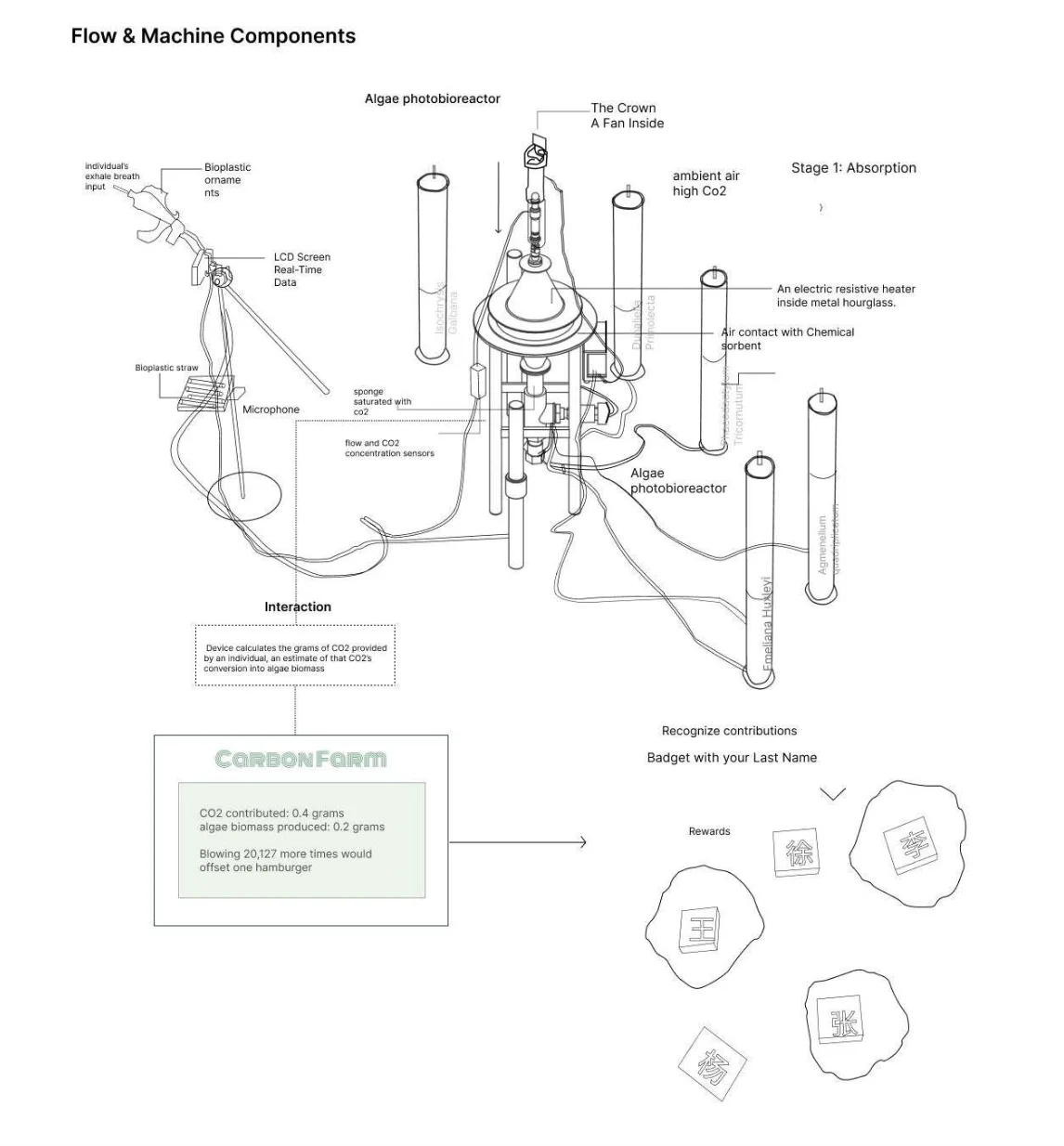
The installation has two air inputs. The Crown, a fan at the top, pulls in ambient air. The breath station takes in a visitor’s exhale through a bioplastic straw and mouthpiece.

Both pass through a metal hourglass where the air meets a chemical sorbent, and flow and CO₂ concentration sensors report what came in.

  1. Intake

    A fan in The Crown draws ambient air. The breath station adds a visitor’s exhale, picked up through the mouthpiece and microphone.

  2. Absorption

    Inside the metal hourglass, air contacts a chemical sorbent. An electric resistive heater sits inside the hourglass.

  3. Measurement

    Flow and CO₂ concentration sensors read the air, and a CO₂-saturated sponge links the sorbent to the water loop.

  4. Growth

    The CO₂ is delivered to five algae photobioreactors, where it becomes algae biomass.

Flow and machine components diagram: breath input with bioplastic ornaments, LCD screen and microphone on a stand; the Crown fan, metal hourglass with heater and sorbent, flow and CO2 sensors; five labelled algae photobioreactors; the LCD readout and surname badge rewards.
Flow and machine components. Stage 1: absorption.

03 · Interaction

A number you can hold

After each breath, an LCD on the microphone stand shows the result in real time: how many grams of CO₂ the visitor contributed, an estimate of how much algae biomass that becomes, and a comparison that makes the scale land.

Contributions are recognized with a badge carrying the visitor’s last name.

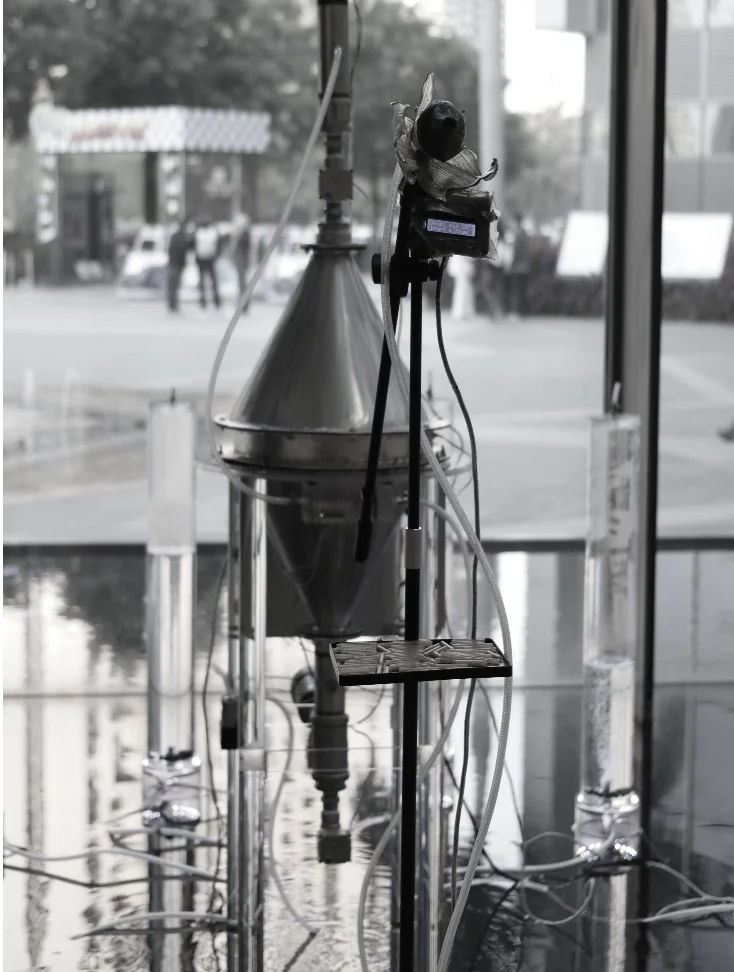
Black and white: the breath microphone with its bioplastic ornament and LCD screen in front of the steel reactor.
The breath station: bioplastic ornament, microphone, and the LCD that shows each result.

04 · Living part

Five photobioreactors

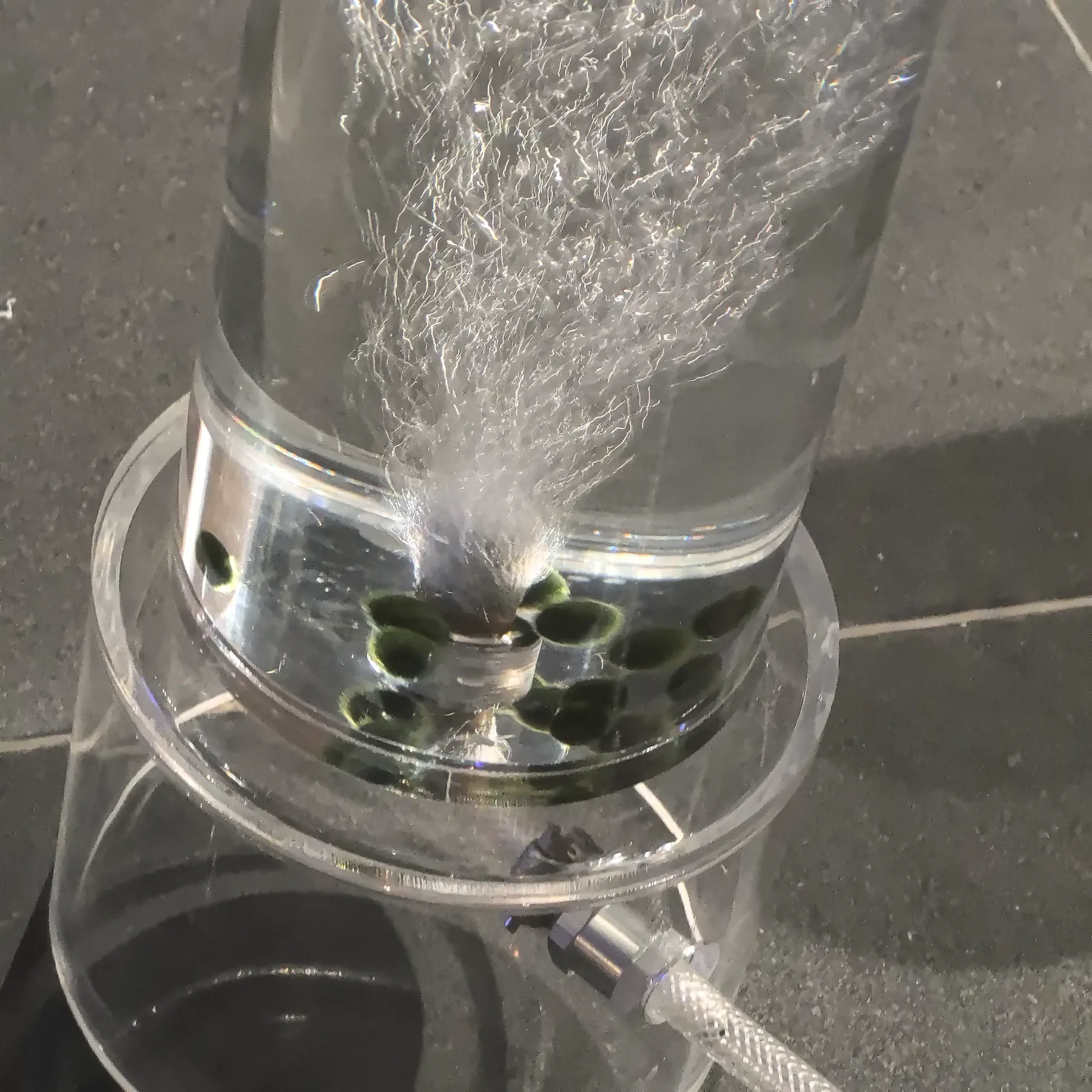
Each acrylic column holds a different microalgae species, lit from below. As CO₂ bubbles through, the columns are where the carbon from visitors’ breath ends up.

Close-up of the base of an algae column: CO2 bubbles stream up from the diffuser through clear water, with green algae balls below.
CO₂ diffusing into a photobioreactor column.

05 · Build

Wiring it on site

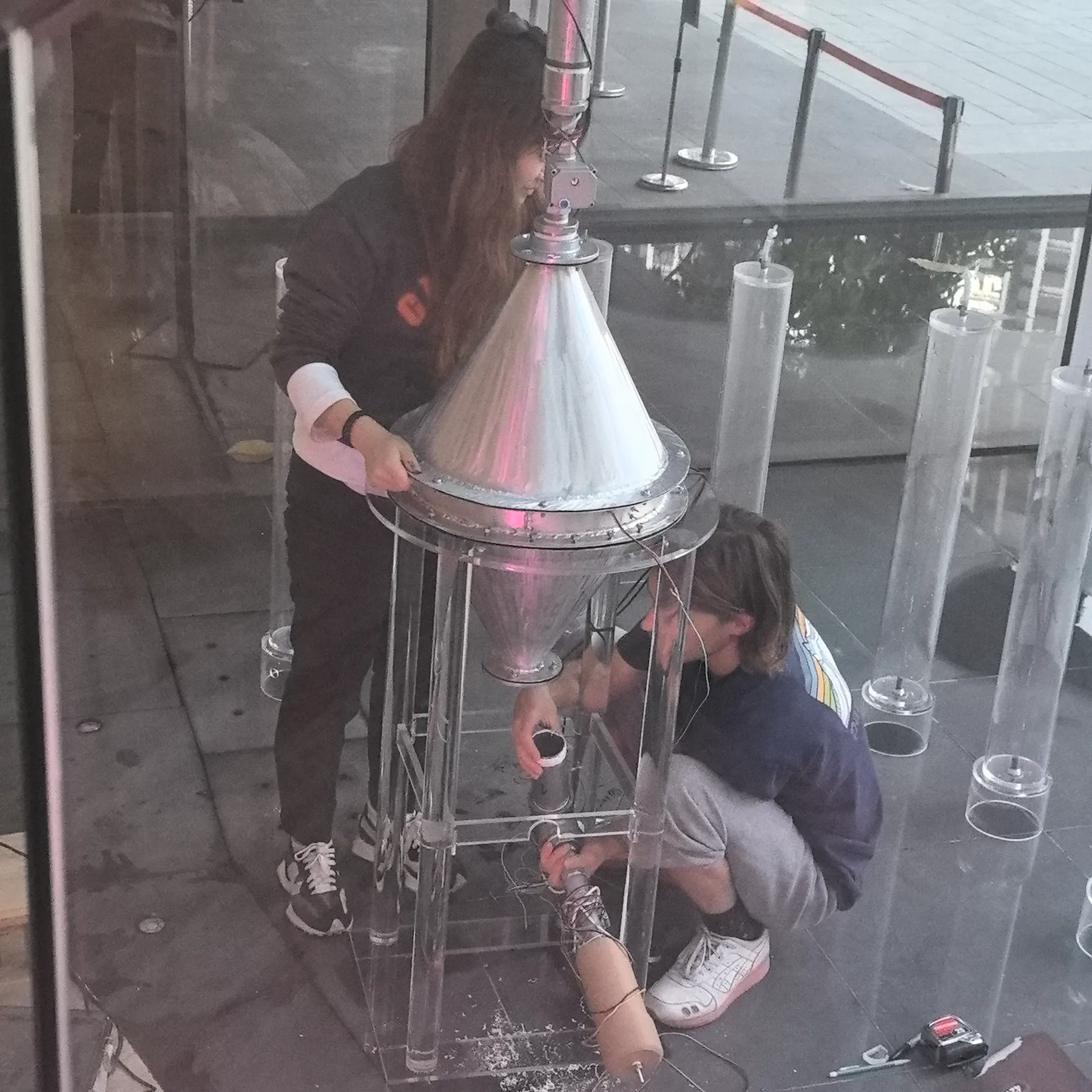
The reactor, sensors, and control box were assembled, wired, and tested in the exhibition space.

Two team members assembling the steel cone reactor on its clear acrylic frame, with empty algae columns around them.
Fitting the reactor onto its acrylic frame.
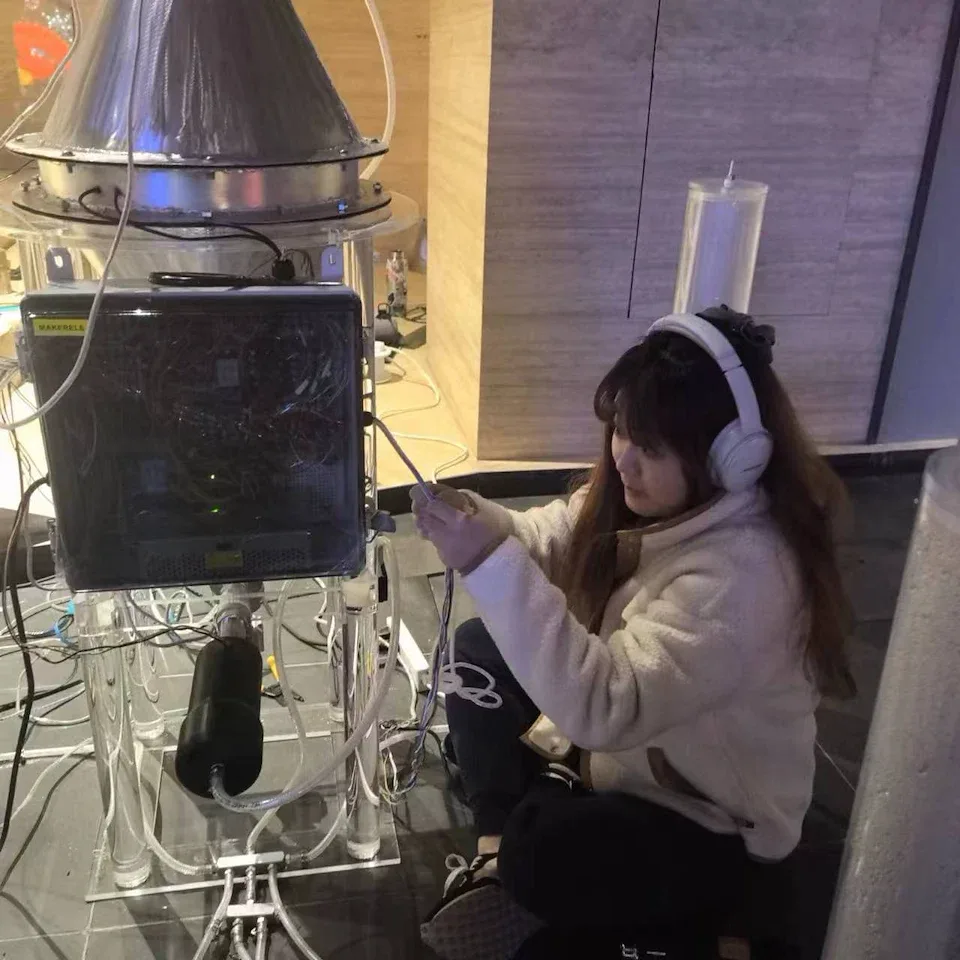
A team member wearing headphones, sitting on the floor and connecting cables to the control box under the reactor.
Connecting the control box under the reactor.
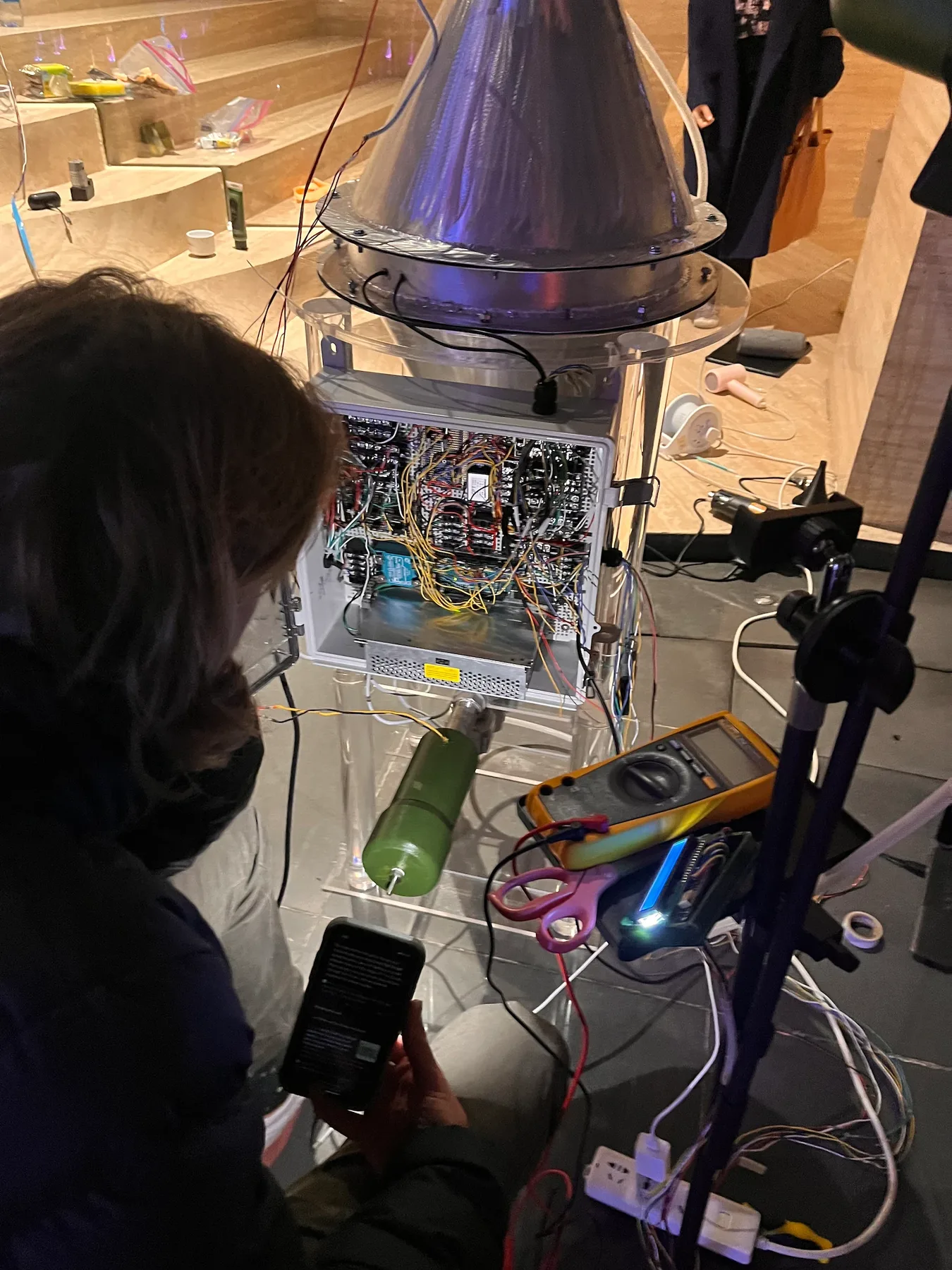
The open control box full of wiring, with a multimeter and the LCD module on the floor beside it.
Testing the control box with a multimeter.
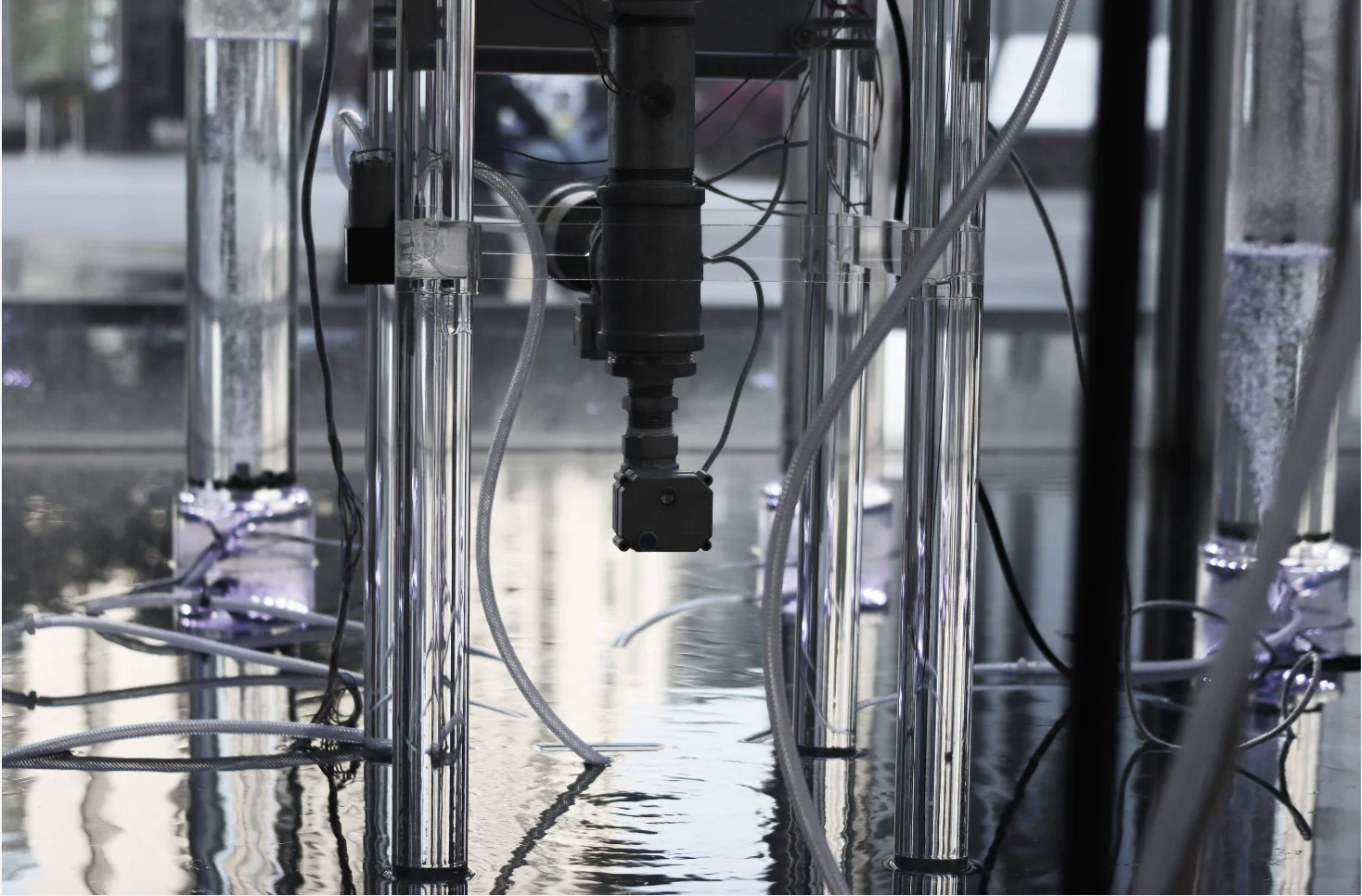
Black and white detail under the reactor: the valve and motor between clear acrylic legs, algae columns bubbling in the background.
Under the reactor: valve, motor, and tubing to the columns.
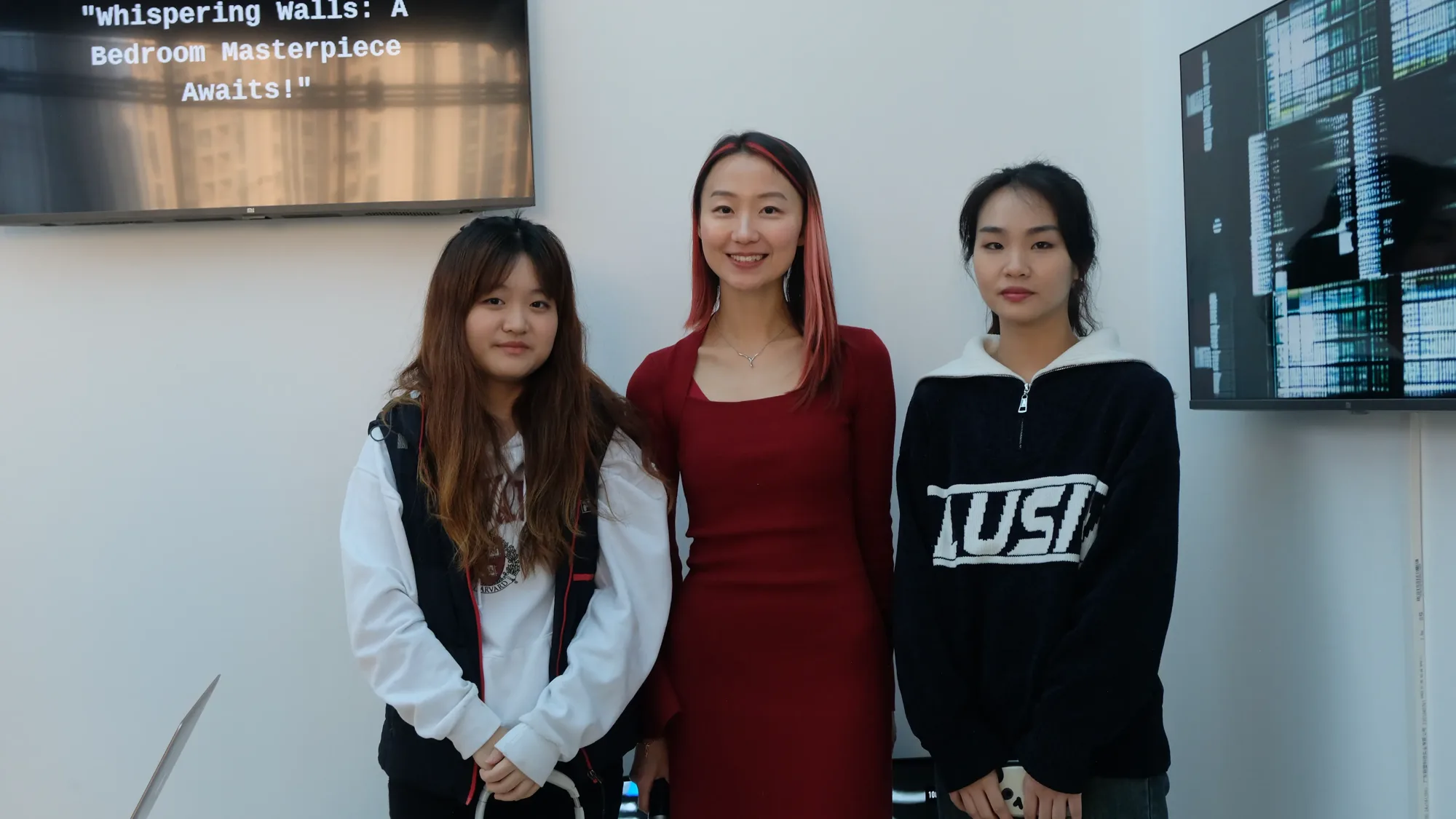
Three members of the team standing together at the exhibition, in front of a white wall with two screens.
The team at the exhibition.